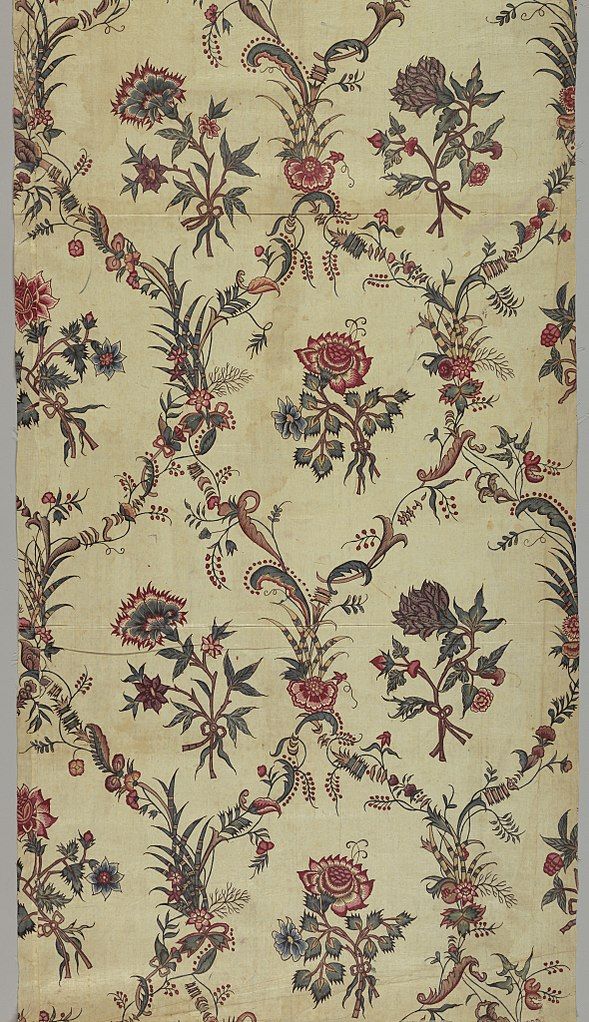
You may have always thought of "chintz" as a derogatory term for garish style, like your grandmother's floral curtains. The term "chintzy" was coined just for that purpose. But actual chintz was a kind of imported fabric that took the Western world by storm.
Chintz — although it might today be largely associated with twee or cutesy armchairs and wallpaper — is, in its true form, a fabric that was not only once highly prized the world over, and helped revolutionise fashion and design, but also changed the course of history — in many cases, unfortunately, for the worse. “[Chintz tells] a story that is much larger, and often much less pleasant”, according to Harvard historian Dr Sven Beckert. “A tale of armed trade, colonialism, slavery, and the dispossession of native peoples.”
The story Beckert is referring to begins, for the most part, in the late 15th Century; but the history of chintz extends far beyond that. Chintz — which comes from the Hindi word chint, meaning “‘spotted’, ‘variegated’, ‘speckled’, or ‘sprayed’”, as Fee writes in the book Cloth That Changed the World — originated in modern-day India and Pakistan thousands of years ago. Contrary to what many think, chintz does not necessarily have anything to do with glazed fabric, or even floral prints. Simply put, chintz is cotton to which substances called ‘mordants’ and ‘resists’ — used to help dyes adhere to it — have been applied.
The demand for chintz helped to shape the shipping industry which in turn shaped much of world history. It is true that chintz was banned in some places, to protect local fabric producers. But the story is much bigger, as you'll read in an article at BBC Culture. -via Damn Interesting
(Image credit: Cooper Hewitt, Smithsonian Design Museum)